A rare Tudor edition in English of this celebrated treatise on inventions and origins, which includes some of the earliest accounts in English of the invention of printing, theatre, mathematics, medicine, magic, religion, law, government (as well as wine, prostitution and warm baths). First published in Latin in 1499 (Venice) and augmented in 1521, De inventoribus rerum digested a huge mass of classical, biblical and contemporary learning and became a Renaissance bestseller. As many as 30 Latin editions alone appeared before the author’s death in 1555. The English translation, an abridgement by Thomas Langley, did not appear until 1546, by which time the Urbino-born Polydore had been resident in England for several decades. A diplomat, scholar, historian an humanist, Vergil counted Desiderius Erasmus, Thomas More, Cuthbert Tunstall, Thomas Linacre and Baldessare Castiglione among his acquaintances and correspondents.
Printed three times in 1546, the first English editions are remarkably rare. Though ours is dated 25 January 1546 and is listed first by STC, it was perhaps preceded by the edition dated 16 April 1546, given that a new year began on Lady Day (25 March) in old style dating. The work is divided into eight books, from which Langley makes succinct abridgements, of which a selection of chapter headings gives a flavour:
I. 9. ‘The begynnyng of Tragedies, Comedies, Satyres, and newe Comedies; 11. ‘Who founde Musyke’; 12. ‘Who found Musicall instruments’; 14. ‘Astrologie’; 15. ‘Who founde Geometrie, Artihmetike’; 16. ‘Physike’; 17. ‘The inventours of herbes medicinable’; 18. ‘The beginnyng of Magike’; 19. ‘Two kyndes of divination’. II. 1. ‘The originall of lawes’; 2. ‘Who ordeyned the first gouvernaunces’; 6. ‘Who set furth books fyrst, or made a library, Printyng, paper, parchement, arte of memory’ (which includes the observation: ’Truely the com[m]odite of liberaries is right profitable & necessary, but in co[m]parison of the crafte of printyng it is nothyng, both because one ma[n] may printe more in one day, then many men in many years could wryte: And also it preserveth both Greke & Latine auctours fro the dau[n]ger of corruption. It was found in Germany at Mogunce [Mainz] by one J. Guthenbergus a knight, he found moreover the Inke by his devise that printers used...)’
Among other entries we find treatments of: war, Olympiades, plays, metals, coins, painting, ‘wyne, oyle, honye, chese, and strange trees broughte into Italy’, labyrinths, theatres, prostitution and brothels, and Christian and Moslem origins and customs.
Provenance: Sotheby’s, June 14th, 1965, lot 231 (Traylen, £55); Blackwell, Centenary Catalogue, 1979, item 27, £450; private collection. STC 24654. STC lists two other printings of 1546: 24655 (also Grafton, dated 16 April) and 24656 (another issue of the same, portions reset, with both title and colophon dated 16 April). In an article of 1888, John Ferguson suggested that these 16 April editions/issues preceded the 25 January edition (though this was not adopted by the editors of STC); John Ferguson, ‘Bibliographical Notes on the English Translation of Polydore Vergil’s work, De Inventoribus Rerum’, 1888, pp. 17 et seq.
(see full details)

![[De inventoribus rerum. In English]. An Abridgeme[n]t of the notable Worke of Polidore Vergile conteygnyng the Deuisers and first Finders out aswell of Artes, Ministeries, Feactes & ciuill Ordinaunces, as of Rites, & Ceremonies, commonly vsed in the Churche: and the originall Beginnyng of the Same. Compe[n]diousely gathered by Thomas Langley. by VERGIL, Polydore.](https://images.vialibri.net/production/26/5716---200.jpg?v=1567179462) VERGIL, Polydore.
~
[De inventoribus rerum. In English]. An Abridgeme[n]t of the notable Worke of Polidore Vergile conteygnyng the Deuisers and first Finders out aswell of Artes, Ministeries, Feactes & ciuill Ordinaunces, as of Rites, & Ceremonies, commonly vsed in the Churche: and the originall Beginnyng of the Same. Compe[n]diousely gathered by Thomas Langley.
‘Imprinted at London within the precincte of the late dissolved house of the grey Friers, by Richarde Grafton printer to the Princis grace, the.xxv. daie of Ianuarie, the yere of our Lorde, M.D.XLVI’. [
1546].
More details Price: £22,500.00
VERGIL, Polydore.
~
[De inventoribus rerum. In English]. An Abridgeme[n]t of the notable Worke of Polidore Vergile conteygnyng the Deuisers and first Finders out aswell of Artes, Ministeries, Feactes & ciuill Ordinaunces, as of Rites, & Ceremonies, commonly vsed in the Churche: and the originall Beginnyng of the Same. Compe[n]diousely gathered by Thomas Langley.
‘Imprinted at London within the precincte of the late dissolved house of the grey Friers, by Richarde Grafton printer to the Princis grace, the.xxv. daie of Ianuarie, the yere of our Lorde, M.D.XLVI’. [
1546].
More details Price: £22,500.00 PHILLIPPS, Thomas.
~
Heralds Visitation Disclaimers.
[London: Rudolph Appel],
1854.
More details Price: £300.00
PHILLIPPS, Thomas.
~
Heralds Visitation Disclaimers.
[London: Rudolph Appel],
1854.
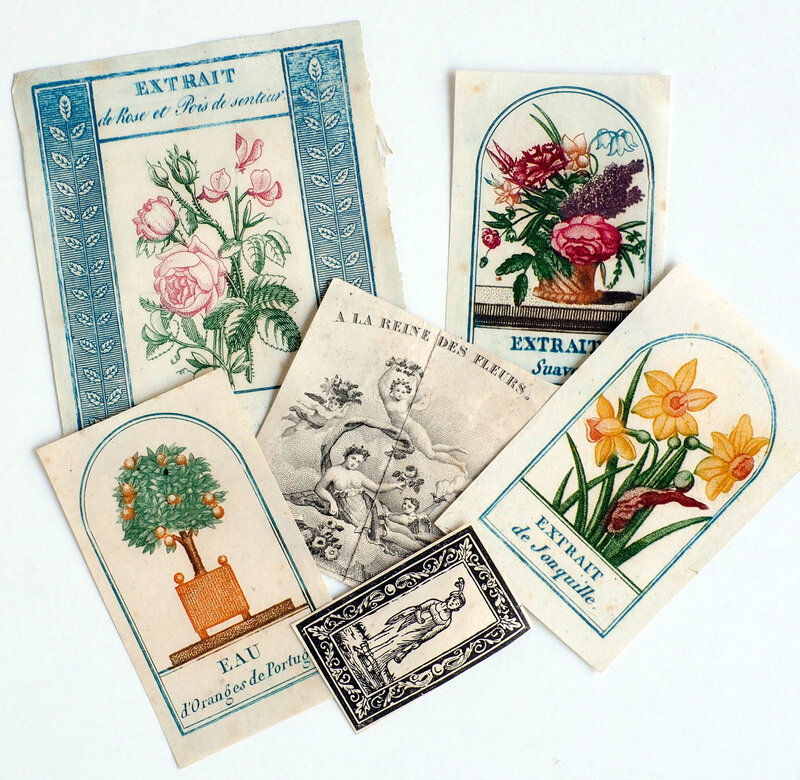
More details Price: £300.00 (PERFUME).
~
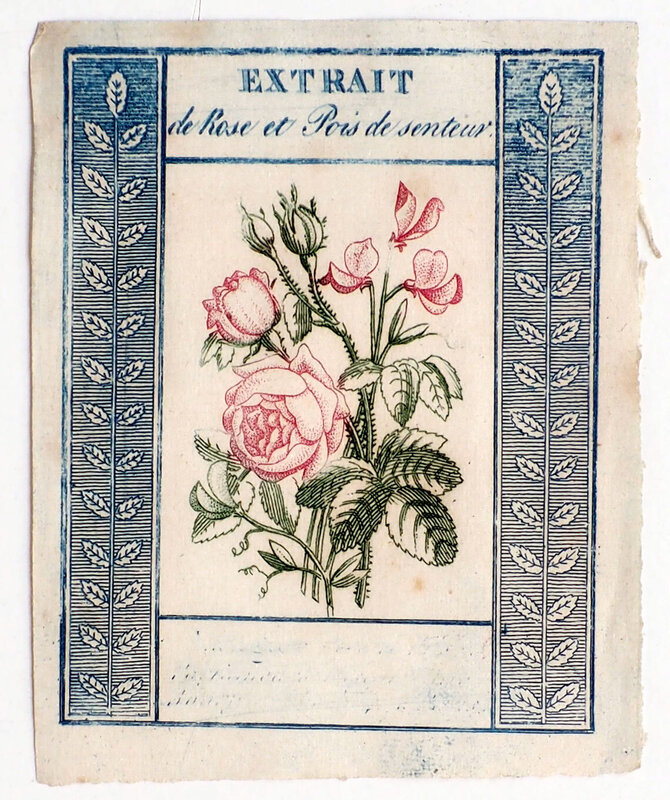
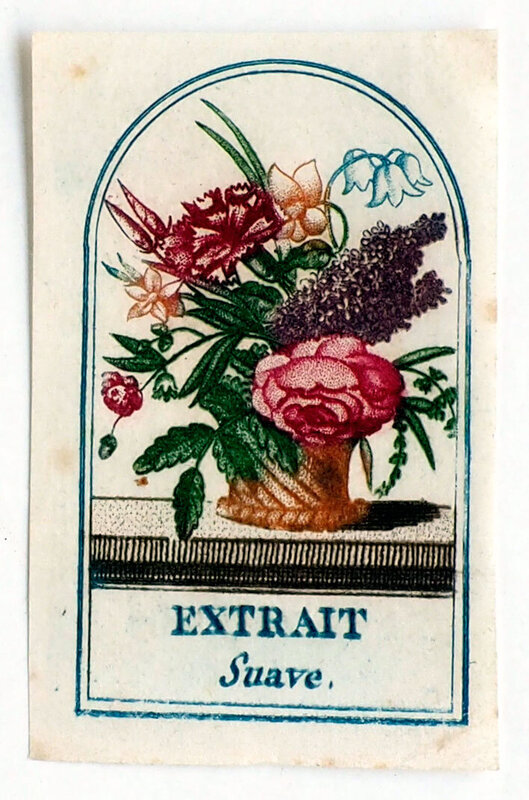
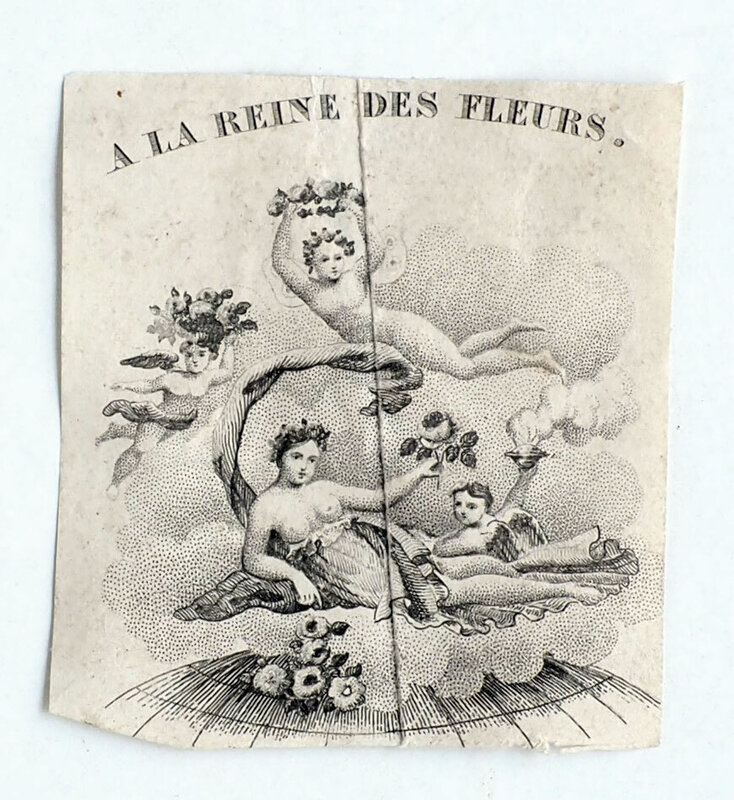
[Four colour printed perfume bottle labels.
Southern France, c.
1820].
More details Price: £350.00
(PERFUME).
~
[Four colour printed perfume bottle labels.
Southern France, c.
1820].
More details Price: £350.00![[De inventoribus rerum. In English]. An Abridgeme[n]t of the notable Worke of Polidore Vergile conteygnyng the Deuisers and first Finders out aswell of Artes, Ministeries, Feactes & ciuill Ordinaunces, as of Rites, & Ceremonies, commonly vsed in the Churche: and the originall Beginnyng of the Same. Compe[n]diousely gathered by Thomas Langley. by VERGIL, Polydore.](https://images.vialibri.net/production/26/5716---800.jpg?v=1567179462)
![Another image of [De inventoribus rerum. In English]. An Abridgeme[n]t of the notable Worke of Polidore Vergile conteygnyng the Deuisers and first Finders out aswell of Artes, Ministeries, Feactes & ciuill Ordinaunces, as of Rites, & Ceremonies, commonly vsed in the Churche: and the originall Beginnyng of the Same. Compe[n]diousely gathered by Thomas Langley. by VERGIL, Polydore.](https://images.vialibri.net/production/26/5716a---800.jpg?v=1567179468)
![Another image of [De inventoribus rerum. In English]. An Abridgeme[n]t of the notable Worke of Polidore Vergile conteygnyng the Deuisers and first Finders out aswell of Artes, Ministeries, Feactes & ciuill Ordinaunces, as of Rites, & Ceremonies, commonly vsed in the Churche: and the originall Beginnyng of the Same. Compe[n]diousely gathered by Thomas Langley. by VERGIL, Polydore.](https://images.vialibri.net/production/26/5716b---800.jpg?v=1567180494)
![Another image of [De inventoribus rerum. In English]. An Abridgeme[n]t of the notable Worke of Polidore Vergile conteygnyng the Deuisers and first Finders out aswell of Artes, Ministeries, Feactes & ciuill Ordinaunces, as of Rites, & Ceremonies, commonly vsed in the Churche: and the originall Beginnyng of the Same. Compe[n]diousely gathered by Thomas Langley. by VERGIL, Polydore.](https://images.vialibri.net/production/26/5716c---800.jpg?v=1567180495)
![Another image of [De inventoribus rerum. In English]. An Abridgeme[n]t of the notable Worke of Polidore Vergile conteygnyng the Deuisers and first Finders out aswell of Artes, Ministeries, Feactes & ciuill Ordinaunces, as of Rites, & Ceremonies, commonly vsed in the Churche: and the originall Beginnyng of the Same. Compe[n]diousely gathered by Thomas Langley. by VERGIL, Polydore.](https://images.vialibri.net/production/26/5716d---800.jpg?v=1567180495)
![Another image of [De inventoribus rerum. In English]. An Abridgeme[n]t of the notable Worke of Polidore Vergile conteygnyng the Deuisers and first Finders out aswell of Artes, Ministeries, Feactes & ciuill Ordinaunces, as of Rites, & Ceremonies, commonly vsed in the Churche: and the originall Beginnyng of the Same. Compe[n]diousely gathered by Thomas Langley. by VERGIL, Polydore.](https://images.vialibri.net/production/26/5716x---800.jpg?v=1590742069)
![Another image of [De inventoribus rerum. In English]. An Abridgeme[n]t of the notable Worke of Polidore Vergile conteygnyng the Deuisers and first Finders out aswell of Artes, Ministeries, Feactes & ciuill Ordinaunces, as of Rites, & Ceremonies, commonly vsed in the Churche: and the originall Beginnyng of the Same. Compe[n]diousely gathered by Thomas Langley. by VERGIL, Polydore.](https://images.vialibri.net/production/26/5716y---800.jpg?v=1590742069)